Understanding protein shape is key to understanding how life works. These microscopic molecules twist and fold in specific ways that determine how they interact with everything around them. A small shift in structure can mean a big change in function—sometimes even leading to disease. Traditionally, viewing protein structures required complicated software and technical know-how.
That's starting to change. Platforms like Hugging Face Spaces are making it easier to visualize proteins using artificial intelligence right from a web browser. These tools bring protein research to more people—students, teachers, and scientists—without needing heavy setups or deep coding skills.
Proteins do most of the work inside a cell. They move molecules, build structures, send signals, and more. To know how a protein behaves, we need to understand its 3D shape. This isn’t always simple. Scientists used to rely on X-ray crystallography or cryo-electron microscopy, which are expensive and slow. Even with the right equipment, seeing the actual shape of a protein takes time.
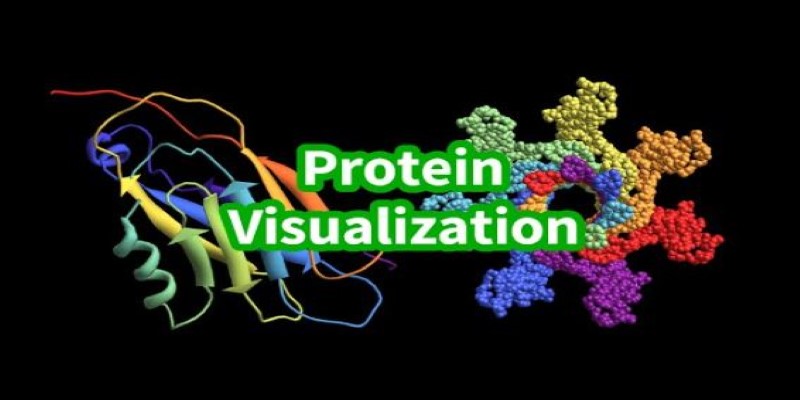
Visualization helps researchers see where a protein bends, folds, or binds to other molecules. It’s useful in everything from drug design to studying genetic diseases. Until recently, software like PyMOL or Chimera was the go-to option. These tools are powerful but can be intimidating for beginners. They require downloads, plugins, and a decent understanding of file types and commands.
Hugging Face Spaces changes the experience by offering web-based apps built by the community. These apps let anyone load a protein model and explore it directly in the browser. Some even use AI predictions to show what a protein should look like based on its sequence. This helps bridge the gap between data and understanding—quickly and with fewer technical barriers.
Hugging Face Spaces is a platform for sharing and running machine learning applications. Developers build apps using frameworks like Gradio or Streamlit and host them on Spaces, allowing others to try them. It's designed to make machine learning more accessible, and that includes areas like biology.
For protein visualization, a Space usually works like this: the user enters a protein ID or uploads a file, the backend fetches the sequence, and a model predicts or retrieves the structure. A viewer then renders the 3D shape on the screen. This viewer is often based on libraries like Mol* or NGL Viewer, which support rotation, zooming, and highlighting parts of the molecule.
These tools don't just display static models. They're interactive. You can turn the protein around, zoom in on a binding site, or colour specific regions to understand their function. The user doesn't need to know how the backend works. It's all handled behind the scenes, making it useful for quick insights or education.
Spaces also encourage open development. Anyone can fork an app, improve it, or use it in a classroom. You can adapt a tool for specific needs, such as comparing protein mutations or integrating known functional data. That flexibility supports collaboration across science, software, and teaching.
Predicting how proteins fold has always been difficult. A sequence of amino acids can twist into countless shapes. Experimental techniques take time and resources, but AI has changed the approach. AlphaFold, created by DeepMind, stunned the scientific world by predicting structures with high accuracy. It showed that machine learning could do what once took years—sometimes in minutes.
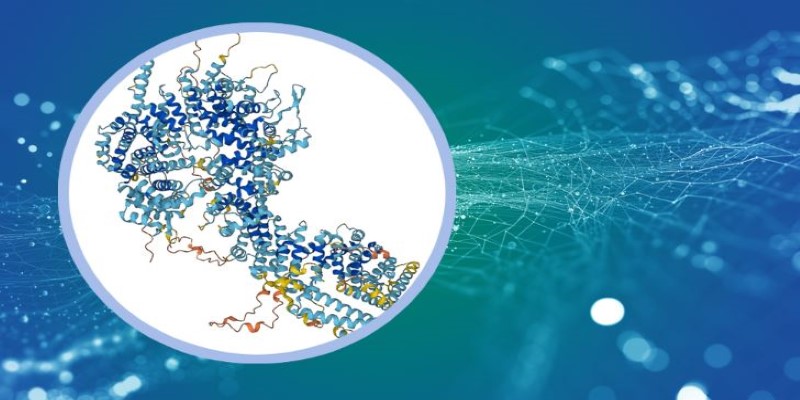
These predictions are not just impressive; they’re useful. They help identify how unknown proteins behave, where they might bind other molecules, and how mutations might alter them. AI allows fast generation of protein models for analysis or drug development, even when lab methods aren’t available.
Hugging Face Spaces takes these predictions and turns them into something you can explore visually. Many Spaces allow users to input a sequence or protein ID, and the app will return a structure using AlphaFold outputs or similar models. You don’t need powerful hardware or complex setups. It runs through the browser, making it available to more people.
Some Spaces include side-by-side comparisons of protein variants or let you label domains and motifs. Others overlay mutation data to highlight regions linked to diseases. This adds depth to the experience and turns predictions into tools for learning and research. Interactivity makes exploration quicker and more intuitive, which is helpful for teams from different backgrounds.
Creating a protein visualization tool on Hugging Face Spaces doesn’t mean starting from scratch. Many existing tools use templates based on Gradio or Streamlit, both of which are beginner-friendly. You can take, for example, Space, modify it, and have it running live quickly.
To begin, you need a Python script that takes input—a protein ID or sequence—and fetches or predicts the structure. You can use an API for AlphaFold or work with pre-computed structures in PDB or mmCIF formats. The output is then passed to a viewer like Mol*, which handles display and interaction.
The viewer lets users rotate the model, zoom in on features, and switch between styles (ribbons, sticks, surfaces). You can highlight important parts or add simple annotations. Keeping the interface clean is the goal—users shouldn’t have to guess. Sample inputs, default settings, and clear labels help make the app user-friendly.
Once your Space is ready, uploading it to Hugging Face is simple. The platform handles hosting and version control. Each Space gets a shareable URL. You can keep it open source or limit access for private use.
This ease of sharing helps researchers and educators. Instead of installing software, they can direct students or colleagues to a browser link. It saves setup time and keeps the focus on the protein.
Protein visualization is now more accessible thanks to Hugging Face Spaces. With just a browser, users can explore protein structures through AI-powered, user-friendly tools. These apps simplify complex biology, making it easier to study folding patterns or mutation effects. By removing technical barriers, they support learning, collaboration, and discovery. This broader access encourages more people to engage with science in meaningful ways, helping research and education move ahead together.

Explore three major mining challenges and six smart solutions to reduce costs, ensure safety, and boost sustainable operations

Nvidia Acquires Israeli AI Startup for $700M to expand its AI capabil-ities and integrate advanced optimization software into its platforms. Learn how this move impacts Nvidia’s strategy and the Israeli tech ecosystem
How AWS Braket makes quantum computing accessible through the cloud. This detailed guide explains how the platform works, its benefits, and how it helps users experiment with real quantum hardware and simulators
Know how to produce synthetic data for deep learning, conserve resources, and improve model accuracy by applying many methods
Generate your OpenAI API key, add credits, and unlock access to powerful AI tools for your apps and projects today.
AI in insurance is transforming the industry with smarter risk assessment and faster claims processing. Discover how technology is improving accuracy, reducing fraud, and enhancing customer experience

A recent study reveals OpenAI’s new model producing responses rated as more human than humans. Learn how it challenges our ideas about communication and authenticity
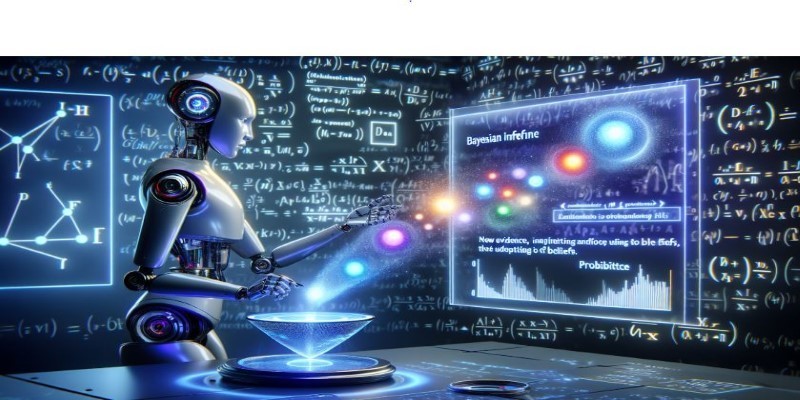
Explore the role of probability in AI and how it enables intelligent decision-making in uncertain environments. Learn how probabilistic models drive core AI functions

Create profoundly relevant, highly engaging material using AI and psychographics that drives outcomes and increases participation

AI can't replace teachers but transforms e-learning through personalized learning, smart content creation, and data analysis

Boost your Amazon sales by optimizing your Amazon product images using ChatGPT. Learn how to craft image strategies that convert with clarity and purpose

Speech recognition uses artificial intelligence to convert spoken words into digital meaning. This guide explains how speech recognition works and how AI interprets human speech with accuracy