Quantum computing has long felt like something out of a science fiction story—mysterious, expensive, and out of reach for most people. But that’s starting to change. With AWS Braket, Amazon has created a way for anyone curious about quantum computing to actually try it, no lab or exotic equipment required. This cloud-based service gives you access to both real quantum machines and powerful simulators, letting you test ideas and learn by doing. Whether you’re a researcher, a student, or simply interested in where computing is headed, AWS Braket makes quantum experimentation practical, approachable, and surprisingly accessible from your desk.
AWS Braket is a managed quantum computing service that lets users develop, test, and run algorithms on both simulated and real quantum hardware. It connects cloud infrastructure to different quantum processors built by leading hardware providers, enabling users to experiment with real quantum devices directly from their browsers or code. Braket does not lock you into one type of technology. Instead, it supports multiple quantum hardware approaches, including gate-based superconducting qubits, trapped ions, and even quantum annealers. This diversity allows users to compare models and figure out which hardware suits their algorithm or research best.

The name itself—Braket—comes from the mathematical notation used in quantum mechanics, which is fitting because it aligns with the goal of bringing quantum concepts to people who are not physicists. Through AWS Braket, you can write and simulate quantum algorithms, debug them using high-performance classical simulators, and then run them on a real quantum device without needing to learn the details of how that hardware is maintained.
AWS Braket provides an end-to-end workflow for quantum computing experiments. It begins with designing and coding your algorithm. Braket supports Python, which means developers don’t have to learn an unfamiliar language to start experimenting. AWS offers a software development kit (SDK) that integrates easily with Jupyter notebooks, making it easy to write, test, and modify your code.
Once your algorithm is ready, you can test it on a simulator. Classical simulators mimic quantum behavior, which helps users debug and optimize their code before sending it to real hardware. Braket includes two simulators: one for running small-scale algorithms quickly, and another, more advanced one capable of simulating up to about 34 qubits. This is useful because real quantum hardware is limited in how many qubits it can handle accurately, and running on a simulator helps you check correctness without waiting in line for a quantum processor.
When you’re ready to run on actual hardware, AWS Braket gives you access to devices from partners such as Rigetti, IonQ, and D-Wave. These machines are hosted in vendor facilities but accessible through the cloud interface. Because hardware time is limited and quantum devices are sensitive, Braket manages the queuing, scheduling, and execution automatically. Once your job is complete, you can review the results through the same interface, download the data, and adjust your experiments as needed.
One of the biggest benefits of AWS Braket is that it removes the barrier to entry for quantum computing. You don’t need to buy or maintain a quantum computer, which would otherwise cost millions and require highly specialized environments. Instead, you pay only for what you use. AWS charges separately for simulator time and hardware time, so users can practice as much as they want on simulators at a much lower cost and only move to real hardware when their algorithm is ready.
Another advantage is flexibility. Since Braket connects you to multiple hardware backends, you’re not tied to a single technology. This is useful because different quantum hardware designs have their strengths and weaknesses. For example, gate-based machines are good for certain optimization problems, while quantum annealers are suited to others. Researchers can try their algorithm on several devices to see which produces the best results.
AWS Braket also offers scalability in the sense that it integrates seamlessly with other AWS cloud services. Users can store their experiment data on S3, analyze results using SageMaker, or set up automated workflows with Lambda. This makes it easier for teams working in different parts of the world to collaborate on experiments, share results, and iterate quickly.
Another subtle but significant benefit is that Braket allows experimentation without requiring deep expertise in quantum hardware. You don’t need to worry about calibrating qubits or cooling them to near absolute zero. The backend hardware vendors handle those details. This opens quantum computing to students, developers, and researchers who are more focused on algorithms than on physics.
AWS Braket is more than a bridge between today’s classical computing and tomorrow’s quantum possibilities. It’s a testing ground for ideas that may shape industries like logistics, finance, pharmaceuticals, and materials science. As quantum hardware improves, Braket will likely evolve to offer even more advanced processors and higher qubit counts. For now, it serves as a sandbox where people build familiarity with quantum concepts and develop software as hardware advances.
Braket supports education and workforce development. Universities use it to teach quantum programming, and companies train employees to understand how quantum algorithms may impact their work. With access to real hardware, students and researchers go beyond theory and test ideas in practice.
The service also fosters collaboration. Since quantum computing remains experimental, sharing algorithms, results, and feedback with peers accelerates progress. Braket’s integration with other AWS tools makes teamwork and data sharing easier.
AWS Braket brings quantum computing within reach by providing access to real quantum devices and simulators through the cloud. It streamlines writing, testing, and running quantum algorithms, letting users experiment with various hardware types. Without costly research labs, students and developers everywhere can explore quantum computing and its possibilities. As a practical platform, it enables learning and experimentation while preparing for a future where quantum technology addresses complex problems. By reducing entry barriers, AWS Braket opens the field to more people, encouraging wider participation and innovation in shaping the next steps of this growing and promising technology.
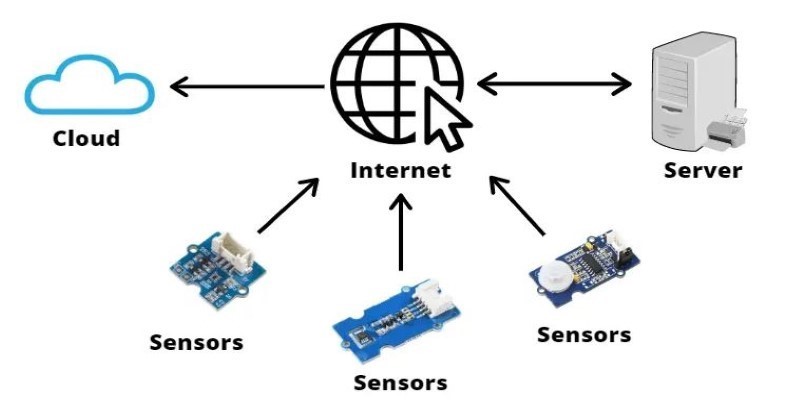
How Edge AI is transforming technology by running AI on local devices, enabling faster processing, better privacy, and smart performance without relying on the cloud

How the AI Hotel Planned for Las Vegas at CES 2025 is set to transform travel. Explore how artificial intelligence in hospitality creates seamless, personalized stays for modern visitors

Explore three major mining challenges and six smart solutions to reduce costs, ensure safety, and boost sustainable operations
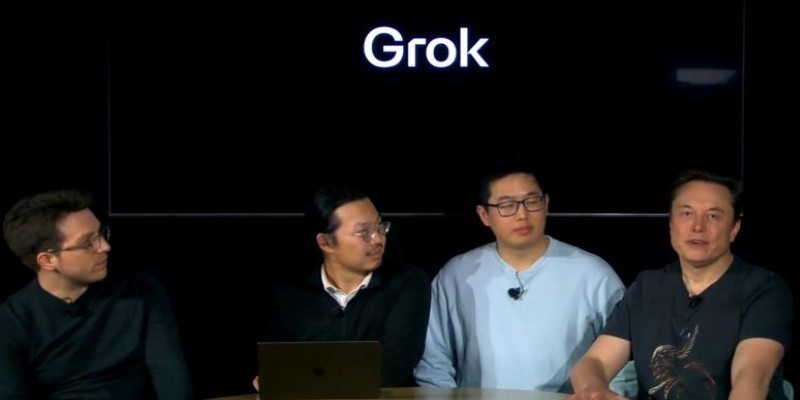
Elon Musk’s xAI unveils Grok 3, a smarter and more candid AI chatbot, and announces plans for a massive South Korean data center to power future innovations in artificial intelligence

A recent study reveals OpenAI’s new model producing responses rated as more human than humans. Learn how it challenges our ideas about communication and authenticity

Generate your OpenAI API key, add credits, and unlock access to powerful AI tools for your apps and projects today.
Fastai provides strong tools, simple programming, and an interesting community to empower everyone to access deep learning

How AI-powered HR and recruitment tools are transforming hiring processes with faster screening, smarter candidate selection, and improved employee retention strategies for modern businesses

Natural Language Processing Succinctly and Deep Learning for NLP and Speech Recognition are the best books to master NLP

AI changes the workplace and represents unique possibilities and problems. Find out how it affects ethics and employment

The Black Box Problem in AI highlights the difficulty of understanding AI decisions. Learn why transparency matters, how it affects trust, and what methods are used to make AI systems more explainable

How to get started with sentiment analysis on Twitter. This beginner-friendly guide walks you through collecting tweets, analyzing sentiment, and turning social data into insight