Slow-motion videos let us notice details we’d otherwise miss — the splash of a droplet, the ripple of fabric, the moment a bird takes flight. Traditionally, these videos required expensive high-frame-rate cameras that few people have access to. In recent years, artificial intelligence has started to bridge this gap, making it possible to create smooth, high-quality slow motion from regular footage.
The FILM model, short for Frame Interpolation for Large Motion, is one of the most effective approaches so far. This scale-agnostic neural network architecture opens new creative possibilities by making slow-motion generation accessible and impressive at any resolution.
The FILM model is designed to solve the frame interpolation problem, where the task is to generate one or more intermediate frames between two existing ones. This makes the video appear slower and smoother without stuttering or unnatural motion. A key feature of the FILM model is that it’s scale-agnostic — it works equally well with low-resolution smartphone clips and high-resolution professional footage. This design choice removes the need for separate models or retraining when working with videos of different sizes.
Many earlier approaches relied on optical flow, which estimates the direction and speed of each pixel as it moves from one frame to the next. While this method works to an extent, it tends to struggle in situations with complex movement, occlusions, or non-linear motion paths, leading to artifacts like ghosting and blurring. FILM avoids these pitfalls by treating frame synthesis as an image generation task rather than a pixel-mapping problem. Instead of calculating where each pixel should go, the model predicts what the new frame should look like as a whole.
This is possible thanks to its transformer-based neural network architecture. Transformers excel at capturing context across a wide area, which helps the model maintain consistency across an entire frame. For example, it can keep edges sharp and textures coherent even in regions with fast or intricate motion. The network doesn’t assume a fixed input size, so it scales naturally to whatever resolution the user provides — a property that makes it especially practical in real-world settings.
What enables FILM to deliver such strong results is its ability to generalize across different kinds of motion and scenes. During training, the model is exposed to a variety of datasets that include diverse resolutions, motion patterns, and lighting conditions. This variety helps it learn not just obvious movement but subtler details, like how shadows shift or how surface textures change between frames. As a result, its output tends to look natural and fluid.

The transformer-based design also contributes to the quality of the output. Since transformers can process information over long distances within an image, FILM can handle large movements that would typically throw off simpler models. This means even when an object moves quickly across the frame or a camera pans abruptly, the model still produces sharp, continuous intermediate frames.
By avoiding heavy dependence on optical flow, FILM sidesteps one of the biggest weaknesses of earlier methods — inaccurate motion estimation. Flow-based models often fail at object edges or where new regions appear, producing unnatural distortions. FILM’s more holistic approach to predicting new frames allows it to handle occlusions and disocclusions more gracefully, keeping scenes more visually consistent.
The FILM model’s versatility makes it useful in many different contexts. For content creators, it offers a way to produce cinematic slow-motion sequences using ordinary cameras, freeing them from the need for specialized hardware. This is especially valuable for independent filmmakers, hobbyists, and educators, who can now produce high-quality slow motion without significant investment.
In sports, slow-motion playback is a powerful tool for analyzing performance, studying technique, or reviewing decisions. FILM enables analysts to generate smooth slow motion even when the original footage was shot at standard frame rates, making it easier to examine critical moments in detail. Wildlife enthusiasts and educators can also use it to make natural phenomena more accessible and engaging.
Another benefit is its efficiency. The FILM model is lightweight enough to run on consumer-grade computers and, with some optimization, even mobile devices. Users don’t need to worry about matching the model to their video resolution, as the scale-agnostic architecture automatically adjusts. This lowers barriers for casual users while still delivering professional-looking results.
Even though the FILM model has advanced the state of slow-motion video creation, there are challenges ahead. It can still struggle with extremely fast or chaotic motion, especially when entire objects appear or disappear between frames. These situations can produce visible artifacts, though they’re far less noticeable than in older methods.

Processing time is another factor. While FILM is more efficient than many alternatives, generating slow motion at very high resolutions can still be time-consuming. Improvements in hardware and further refinement of the model could help make it faster, bringing it closer to real-time performance.
The ideas behind FILM’s architecture may also influence other areas of video processing. A scale-agnostic approach that works well on multiple resolutions could improve not only interpolation but also tasks like super-resolution and frame prediction, making video editing tools more flexible and easier to use.
The FILM model represents a major step forward in making slow-motion video accessible and of high quality. Its scale-agnostic neural network architecture allows it to create smooth, realistic intermediate frames without relying on specialized cameras or fragile optical flow techniques. By combining a transformer-based design with diverse training data, it handles a wide range of resolutions and motions gracefully. This makes it valuable for filmmakers, sports analysts, educators, and anyone interested in creating compelling slow-motion clips. While there’s still work to be done in improving speed and handling edge cases, FILM shows how intelligent software can replace costly hardware, opening creative possibilities for everyone.

How does Qualcomm's latest AI startup acquisition reshape its IoT strategy? Here's what this move means for edge intelligence and smart device performance

Explore three major mining challenges and six smart solutions to reduce costs, ensure safety, and boost sustainable operations
How AWS Braket makes quantum computing accessible through the cloud. This detailed guide explains how the platform works, its benefits, and how it helps users experiment with real quantum hardware and simulators
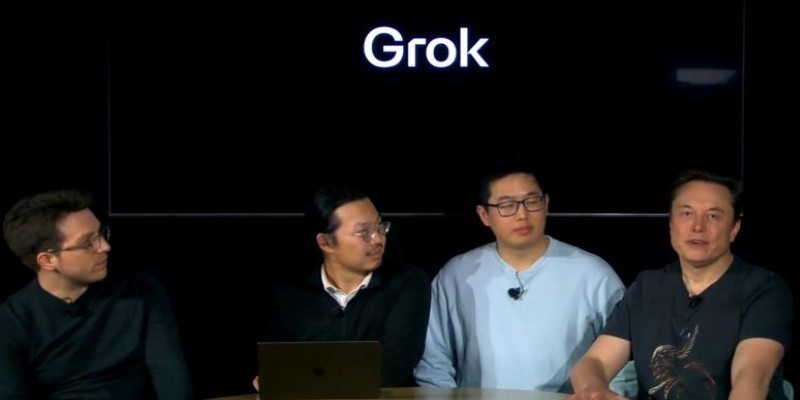
Elon Musk’s xAI unveils Grok 3, a smarter and more candid AI chatbot, and announces plans for a massive South Korean data center to power future innovations in artificial intelligence

How next-generation technology is redefining NFL stadiums with AI-powered systems that improve crowd flow, enhance fan experience, and boost efficiency behind the scenes

How the AI Hotel Planned for Las Vegas at CES 2025 is set to transform travel. Explore how artificial intelligence in hospitality creates seamless, personalized stays for modern visitors

Knowledge representation in AI helps machines reason and act intelligently by organizing information in structured formats. Understand how it works in real-world systems

Know how to produce synthetic data for deep learning, conserve resources, and improve model accuracy by applying many methods
How to get started with sentiment analysis on Twitter. This beginner-friendly guide walks you through collecting tweets, analyzing sentiment, and turning social data into insight

How the FILM model uses a scale-agnostic neural network to create high-quality slow-motion videos from ordinary footage. Learn how it works, its benefits, and its real-world applications

AI can't replace teachers but transforms e-learning through personalized learning, smart content creation, and data analysis

How leveraging AI into your business can help save time, reduce repetitive tasks, and boost productivity with simple, smart strategies