Running a business often feels like a race against time. With managing clients, operations, emails, and scaling, time always seems to slip away. But what if you could manage it smarter? Not by working longer hours or hiring more staff but by letting technology—specifically, artificial intelligence—take over.
AI isn’t just for large corporations; it’s accessible, practical, and transforming how businesses of all sizes operate. It automates repetitive tasks, saving hours of work in seconds. The best part? You don’t need to be a coder to benefit. AI could be the silent partner your business needs to work smarter, not harder.
At its core, artificial intelligence is about one thing: decision-making at scale. AI tools use algorithms and data to automate decisions that used to require human thought and time. This means fewer manual tasks and more focus on what actually matters—like planning, creative work, or customer interaction.
Let’s take customer support, for example. Instead of answering every single query, many businesses now use AI-powered chat systems that handle the bulk of routine questions. These bots are available 24/7, never tire, and only escalate issues when something really needs a human. That alone saves hours of repetitive work every week.
Another clear area where AI saves time is in content generation. Whether creating emails, blog summaries, or report summaries, AI writing software has made leaps and bounds. They're not there to steal your creativity but to speed up the first draft so you can edit, not redo. This alone can cut 40–60% of the time spent on creating content.
Then, of course, there's sorting and analyzing data. AI can rummage through vast amounts of information in seconds, extracting insights or red flags you may have otherwise overlooked. Consider how many hours you waste flipping through spreadsheets or dashboards. Now, picture a tool flipping through them for you as you grab a coffee.
Time is also saved in the hiring process. AI-based applicant tracking systems can filter resumes based on job criteria, rank candidates, and even predict how well someone might fit in your company. This doesn't just speed things up—it helps you avoid wasting time on interviews that lead nowhere.
One of the biggest myths about artificial intelligence is that it requires a big investment or a technical team. Not true. There are dozens of tools that you can plug right into your current setup—no complex integrations, no heavy learning curve.

For instance, tools like Zapier or Make (formerly Integromat) use AI logic to create automated workflows. Say you get an email with an invoice. You can set up an automation that reads the email, extracts the data, and uploads it to your accounting software. What once took ten minutes now takes zero.
Marketing? That’s another big win. AI can handle scheduling posts, adjusting ad budgets, or even analyzing which headlines get the best clicks. Social media management tools now come with AI baked in, helping you post at the right time, choose better hashtags, and track performance across platforms—all without constant monitoring.
AI also shines in inventory management for e-commerce businesses. It predicts what stock will run out, when to reorder, and what your customers are likely to buy next—all based on past behavior. That means fewer shortages, less overstock, and a better customer experience. Again, it’s about saving time from guesswork and decision fatigue.
Another useful area is document processing. Tools that read and interpret PDFs, forms, and receipts now use machine learning to handle data entry. They scan, extract, and send information where it needs to go. There is no need to manually punch in numbers or organize files—AI handles it.
All of this is possible without overhauling your business or learning to code. Most AI tools come with user-friendly dashboards and plug-ins for your existing software, from Gmail to QuickBooks to WordPress.
Leveraging AI in your business isn't just about shaving a few minutes off a task—it's about changing the way you think about work. Imagine removing the mental clutter of menial decisions and focusing on bigger goals: scaling, innovating, or simply taking a break without guilt.

It also means your team works smarter, not harder. Instead of wasting time on admin tasks or double-checking spreadsheets, they’re free to brainstorm new products, improve client relationships, or take on more projects without feeling overworked.
Time savings improve output and quality. When AI handles the routine, human input can be more thoughtful, precise, and creative. That's how businesses stand out—not by working faster but by working better.
There's also a long-term benefit: resilience. Businesses that use AI tend to be more agile. When markets shift or when something unexpected happens (like a supply chain delay or global crisis), AI tools help you respond quickly. You can adjust campaigns, update customer communication, or shift priorities without grinding everything to a halt.
Even if you start small—one tool, one workflow—you’ll feel the shift. The more tasks you let AI handle, the more time you get back to lead and grow your business with purpose.
Leveraging AI in your business isn't just a trend—it's a powerful tool that can save valuable time and enhance productivity. By automating repetitive tasks, AI allows you to focus on strategic decisions, innovation, and growth without getting bogged down in manual work. Whether it's streamlining customer support, managing inventory, or handling data analysis, AI can integrate seamlessly into your existing workflows and bring immediate benefits. The key is to start small and gradually expand AI use to fit your business needs. Embracing AI is a step toward working smarter, not harder, and positioning your business for long-term success.

The Black Box Problem in AI highlights the difficulty of understanding AI decisions. Learn why transparency matters, how it affects trust, and what methods are used to make AI systems more explainable

How AI-powered HR and recruitment tools are transforming hiring processes with faster screening, smarter candidate selection, and improved employee retention strategies for modern businesses

The alignment problem in AI highlights the challenges of ensuring AI follows human values. Learn why it matters and how experts are working to solve it

Uncover how The Turing Test shaped our understanding of artificial intelligence and why modern AI evaluation methods now demand deeper, task-driven insights

How next-generation technology is redefining NFL stadiums with AI-powered systems that improve crowd flow, enhance fan experience, and boost efficiency behind the scenes

Know the pros and cons of using JavaScript for machine learning, including key tools, benefits, and when it can work best

Knowledge representation in AI helps machines reason and act intelligently by organizing information in structured formats. Understand how it works in real-world systems

Boost your Amazon sales by optimizing your Amazon product images using ChatGPT. Learn how to craft image strategies that convert with clarity and purpose

How leveraging AI into your business can help save time, reduce repetitive tasks, and boost productivity with simple, smart strategies
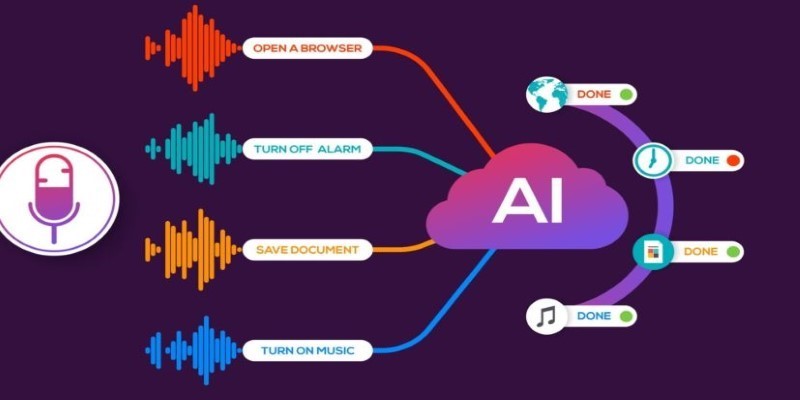
Speech recognition uses artificial intelligence to convert spoken words into digital meaning. This guide explains how speech recognition works and how AI interprets human speech with accuracy

How to visualize proteins using interactive, AI-powered tools on Hugging Face Spaces. Learn how protein structure prediction and web-based visualization make research and education more accessible

Explore three major mining challenges and six smart solutions to reduce costs, ensure safety, and boost sustainable operations